
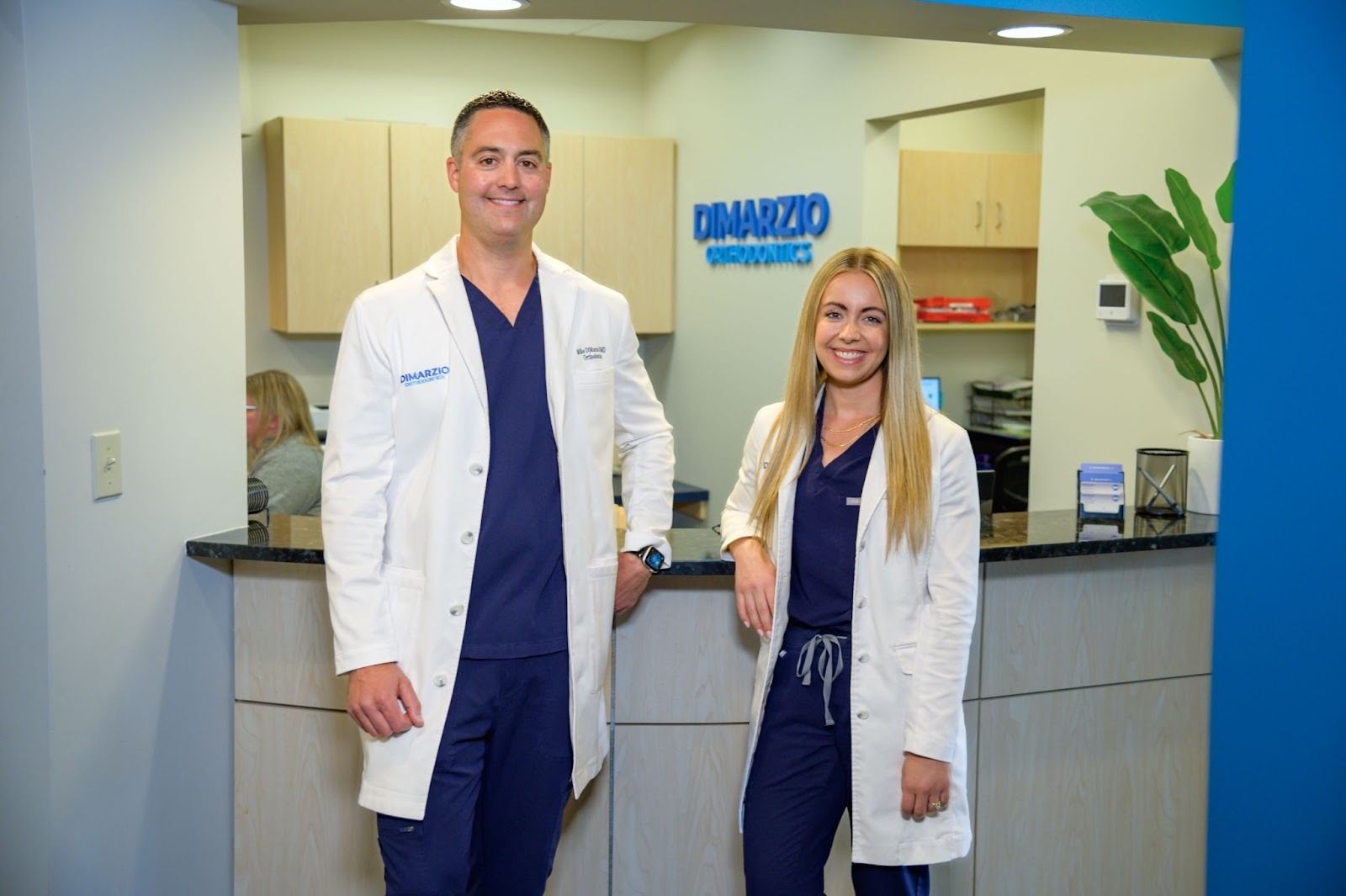
Bite problems affect much more than the look of your smile. They influence how you chew, speak, and even how your jaw feels at the end of the day. At DiMarzio Orthodontics in Quincy, MA, board-certified orthodontist Dr. DiMarzio and Dr. Marczak help South Shore families correct underbites and crossbites with proven treatments built around each smile. With decades of experience and specialized training, our team knows how to match the right approach to the right patient.
What Are Underbites and Crossbites?
Underbites and crossbites are two common types of malocclusion, or misaligned bites. An underbite occurs when the lower teeth sit in front of the upper teeth when you close your mouth. A crossbite happens when some upper teeth close inside the lower teeth, either at the front (anterior) or along the sides (posterior). Both affect how your teeth meet and function together. Other bite concerns we treat include overbites and open bites.
These bite issues often start early. Common causes include genetics, differences in how the upper and lower jaws grow, prolonged thumb-sucking during childhood, and delayed loss of baby teeth. Sometimes the cause is dental, meaning the teeth themselves are tipped or positioned incorrectly. Other times, it’s skeletal, meaning the jaws are the source of the misalignment.
The distinction matters. A dental underbite or crossbite can often be corrected with braces or clear aligners. A skeletal case may need additional appliances or, in more advanced adult cases, a combined orthodontic and surgical approach. That’s why an accurate diagnosis from your orthodontist is the first step toward reaching your smile goals.
How Orthodontists Treat Underbites and Crossbites
Orthodontists treat underbites and crossbites by first diagnosing whether the cause is dental or skeletal, then selecting an appliance that guides teeth and jaws into proper alignment. Treatment options include metal or clear braces, Invisalign clear aligners, palatal expanders for growing patients, elastics to shift jaw position, and, in severe skeletal cases, surgical orthodontics for adults.
Here’s how the process typically unfolds at our Quincy, MA office:
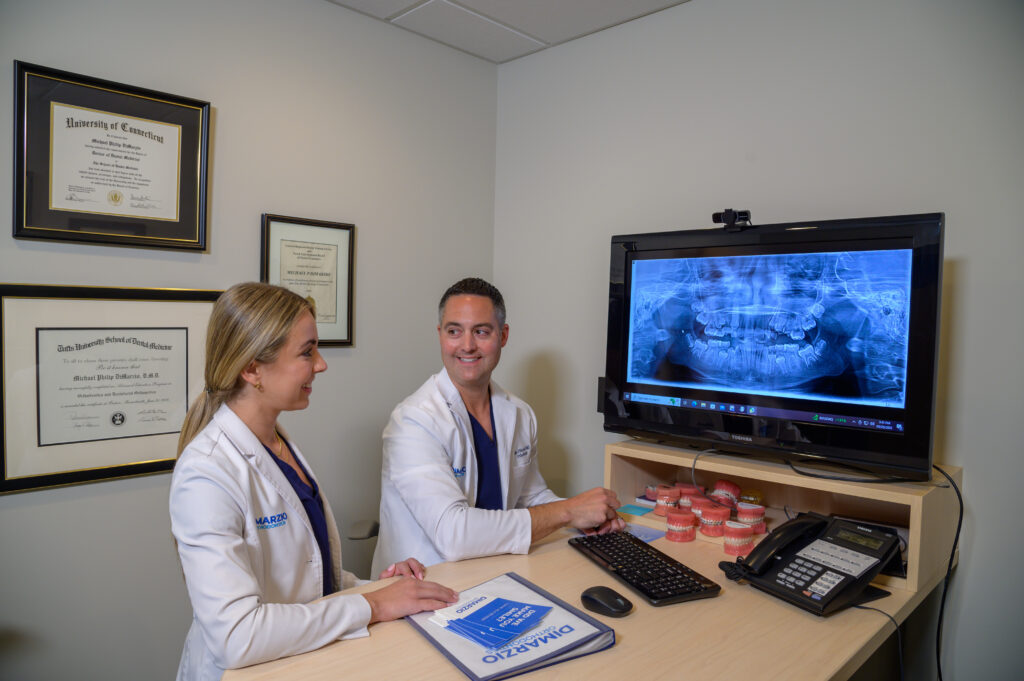
- Diagnosis and planning. Dr. DiMarzio or Dr. Marczak performs a thorough exam using digital X-rays, photos, and 3D scans to see exactly what’s happening with your teeth and jaws. This helps determine whether the issue is dental, skeletal, or a combination of both.
- Braces (metal or clear). Braces are a tried and true option for shifting teeth into correct alignment. They work well for complex tooth movements and give your orthodontist precise control throughout treatment.
- Invisalign clear aligners. As a platinum Invisalign provider, we use Invisalign to correct mild-to-moderate underbites and crossbites with a series of custom-made, nearly invisible aligners.
- Palatal expanders. In children and teens whose jaws are still growing, an expander gently widens the upper jaw to correct crossbites and create space for teeth to align naturally.
- Elastics and functional appliances. Small rubber bands and specialized appliances help guide the jaw into a better position during treatment, especially for underbite correction.
- Surgical orthodontics. When an adult has a severe skeletal underbite that braces alone can’t fix, we coordinate with an oral surgeon to reposition the jaw and follow up with orthodontics to fine-tune the bite.
No two mouths are the same, so treatment is built around your age, the severity of your bite, and your smile goals.
Why Should You Correct an Underbite or Crossbite?
Fixing an underbite or crossbite does more than straighten your teeth. It changes how your mouth works every single day.
- Better chewing and biting function. Properly aligned teeth meet the way they should, so eating becomes more comfortable.
- Less uneven wear and jaw strain. When your bite is off, certain teeth take more pressure than others. Correcting the bite helps distribute force evenly.
- Lower risk of TMJ discomfort and headaches. A balanced bite reduces stress on the jaw joints and surrounding muscles.
- Easier cleaning. Straight, well-aligned teeth are easier to brush and floss, which lowers the risk of decay and gum disease.
- Clearer speech and improved facial balance. Bite corrections can help with certain speech sounds and support a more harmonious profile.
- A confidence boost. Many patients tell Dr. DiMarzio and Dr. Marczak that they smile more freely once their bite is corrected.
Smiles that have been straightened and properly aligned are typically healthier and easier to care for over a lifetime, which is exactly the long-term outcome the DiMarzio Orthodontics team works toward with every family. You can see what that looks like in our before and after gallery.
Treatment Comparison: Braces vs Invisalign vs Surgery
Choosing the right treatment depends on your age, the severity of your bite, and whether the cause is dental or skeletal. Here’s a quick side-by-side look at the main options we offer.
| Treatment | Best For | Age Range | What It Corrects |
|---|---|---|---|
| Metal Braces | Complex tooth movement, moderate to severe bite issues | Children, teens, adults | Dental underbites, crossbites, alignment |
| Clear Braces | Same as metal braces with a more discreet look | Teens and adults | Dental underbites and crossbites |
| Invisalign | Mild to moderate cases, image-conscious patients | Teens and adults | Mild bite corrections, spacing, alignment |
| Palatal Expander | Widening a narrow upper jaw | Children and younger teens | Posterior crossbites, jaw width issues |
| Surgical Orthodontics | Severe skeletal underbites in adults | Adults | Jaw-based misalignment |
Metal and clear braces give your orthodontist the most precise control, making them a strong choice for more involved cases. Invisalign clear aligners are removable, so you don’t have to worry about avoiding certain foods, as long as you take them out for every meal. A palatal expander is often the smartest first step for a growing child with a crossbite, because it takes advantage of natural jaw development while treatment is still simple.
Surgical orthodontics sounds intimidating, but it’s reserved for cases where the jaws themselves are significantly out of position. When it’s needed, it delivers results that braces alone can’t achieve, restoring both function and balance to the face. Dr. DiMarzio and Dr. Marczak will walk you through exactly which option is the right fit for your smile.
Cost Factors for Underbite and Crossbite Treatment
The cost of underbite and crossbite treatment depends on the severity of the bite, whether the cause is dental or skeletal, the type of appliance used, and the length of treatment. Simpler cases treated with aligners or braces cost less than those requiring expanders or jaw surgery. Insurance benefits and flexible payment plans can help make care more manageable for most families.
A few specific factors that influence your total investment:
- Severity and cause. Mild dental crossbites are typically less involved than skeletal underbites.
- Type of treatment. Metal braces, clear braces, Invisalign, expanders, and surgical orthodontics each have different price points.
- Treatment length. Longer treatment or multiple appliances can raise the overall cost.
- Jaw surgery. When surgery is part of the plan, it adds a separate surgical cost on top of orthodontic care.
- Insurance and financing. Many families use orthodontic insurance benefits along with flexible financing options to spread payments out comfortably.
We keep our treatment recommendations honest and our pricing clear. A personalized cost estimate is part of your first visit, so you’ll know what to expect before treatment begins.
Are You a Candidate for Bite Correction?
Most people are candidates for bite correction. Orthodontists treat underbites and crossbites at nearly every age, and the right approach depends on where you are in life.
- Children. Early intervention while the jaws are still growing can guide development and often reduces the need for more involved treatment later. The American Association of Orthodontists recommends a first orthodontic check-up no later than age 7.
- Teens. This is a great time for braces, clear aligners, and expanders. Teen jaws are still developing, and treatment works efficiently at this stage.
- Adults. Mild-to-moderate underbites and crossbites can often be corrected with Invisalign or braces. More severe skeletal cases may benefit from surgical orthodontics combined with braces.
- Oral health matters. Healthy teeth and gums help treatment go smoothly, so we’ll look at your overall dental health during your first visit.
Maybe you’re a parent wondering about your child’s bite, or maybe you’re an adult who has lived with an underbite for years. Either way, there’s a path forward. A free consult with Dr. DiMarzio or Dr. Marczak will help you find your perfect fit.
Frequently Asked Questions
Can Invisalign fix an underbite or crossbite?
Yes, Invisalign can correct many mild-to-moderate underbites and crossbites, especially when the cause is dental rather than skeletal. Custom aligners move teeth into proper position, and elastics can be added to help guide the bite. For more severe skeletal cases, braces or surgical orthodontics may be recommended instead.
How long does bite correction treatment take?
Most bite correction treatments take somewhere between 12 and 24 months, but every case is different. Milder crossbites can sometimes be corrected in less time with Invisalign, while skeletal underbites requiring surgery and braces may take longer. Dr. DiMarzio or Dr. Marczak will give you a realistic timeline at your first visit.
Is jaw surgery always required for an underbite?
No. Many underbites, especially in children and teens, can be corrected without surgery using braces, Invisalign, expanders, or elastics. Jaw surgery is generally only recommended for adults with severe skeletal underbites where the jaws themselves are significantly misaligned and can no longer be guided through growth.
At what age should crossbites be treated?
Crossbites are often best addressed early, sometimes as young as age 7 or 8, when a palatal expander can take advantage of natural jaw growth. That said, crossbites can be treated at any age. The right timing depends on the type of crossbite and whether it’s dental or skeletal.
Does bite correction hurt?
Bite correction is usually comfortable. You may feel some tenderness or a slight ache for a few days after braces are placed or when you switch to a new Invisalign aligner, but this fades quickly. If you ever feel sharp or severe discomfort, contact our team right away so we can help.
What happens if I don’t treat my crossbite?
Untreated crossbites can lead to uneven tooth wear, jaw strain, TMJ discomfort, gum recession, and difficulty chewing. In children, an untreated crossbite can also affect how the jaw grows. Treating the issue early usually means simpler care and better long-term outcomes.
Curious what treatment could look like for you or a loved one? Welcome to the DiMarzio Orthodontics family. When you’re ready, Dr. DiMarzio or Dr. Marczak can walk you through your options for a healthier, more balanced smile at a visit that fits your schedule. Your smile is in good hands.