
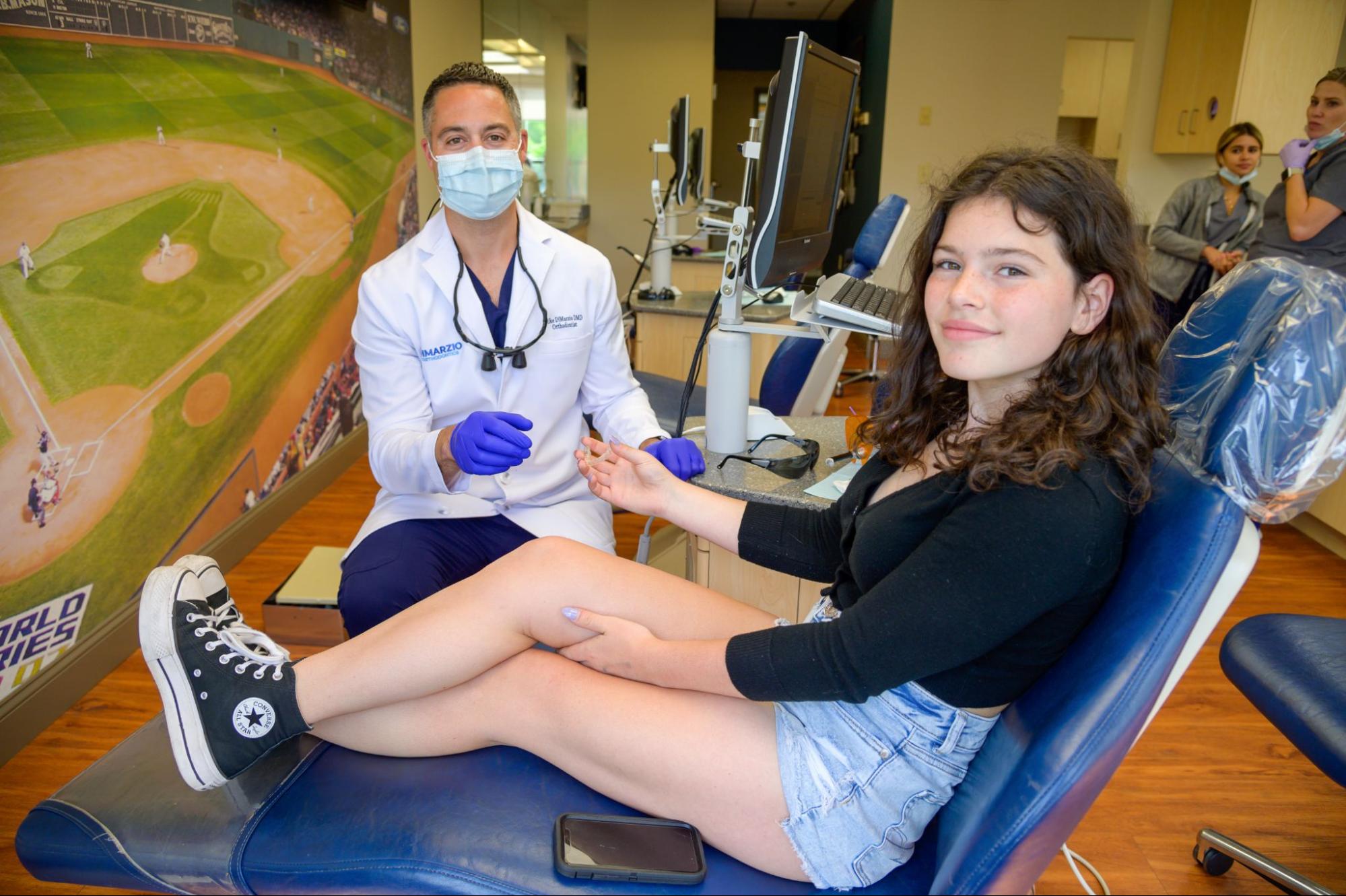
Choosing between braces or Invisalign is one of the biggest decisions you’ll make about your smile transformation. Both are tried and true treatments that can give you stunning results, but they work differently and suit different lifestyles. At DiMarzio Orthodontics in Quincy, MA, Dr. DiMarzio and Dr. Marczak help South Shore families weigh the braces vs Invisalign question every day, so you can find your perfect fit with confidence.
What Are Braces and Invisalign?
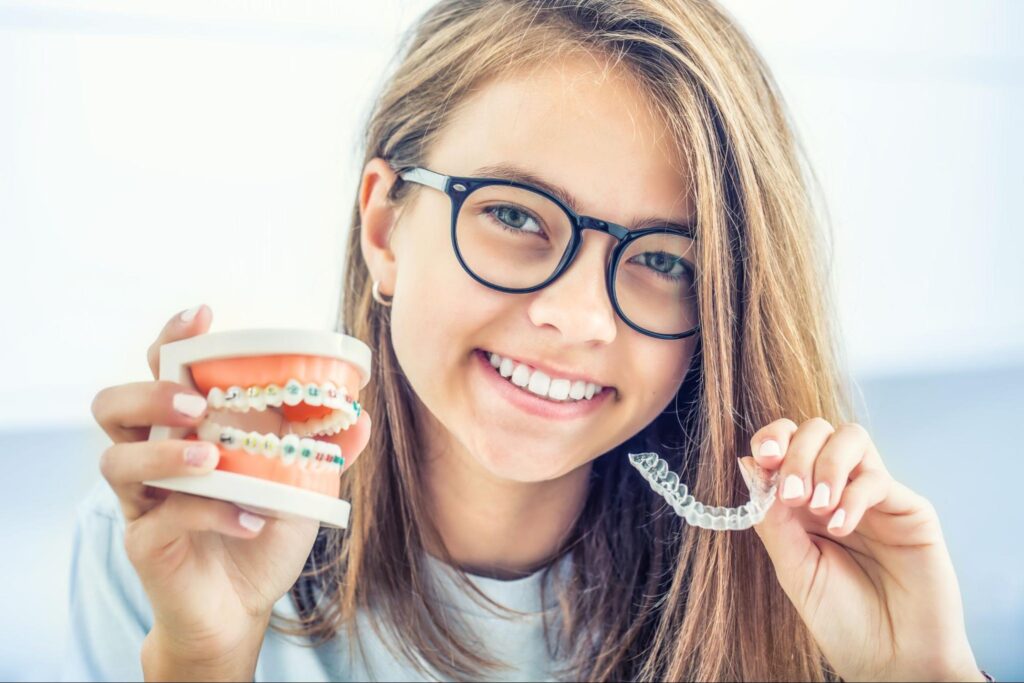
Braces and Invisalign are two proven orthodontic treatments that correct crooked teeth, spacing, and bite issues. Braces use small brackets bonded to teeth and connected by a wire that gently guides them into place. Invisalign uses a series of clear, removable custom aligners that shift teeth in small steps. Both are supervised by your orthodontist from start to finish.
The main difference comes down to how each treatment fits into your life. Braces stay on your teeth 24/7 and do the work for you, which is great if you’d rather not think about compliance. Invisalign aligners come out when you eat, brush, or floss, which means fewer diet restrictions and easier daily cleaning. Weighing braces vs Invisalign really starts with your daily habits.
You have options within each category too. Metal braces are the classic choice, while clear braces blend in with your natural tooth color for a subtler look. Invisalign offers plans for teens, adults, and mild to moderate correction needs. Whichever route you choose, Dr. DiMarzio and Dr. Marczak will walk you through what to expect during your first free consultation visit. You can also browse all of our treatment options as you compare.
How Braces and Invisalign Work
Braces work by applying steady, continuous pressure to your teeth through a wire that connects each bracket. At our Quincy, MA office, we use shape-memory NiTi wires to deliver gentle force between adjustments. You’ll visit us every 4-8 weeks so Dr. DiMarzio or Dr. Marczak can fine-tune the wire and check your progress. Treatment typically takes 18-24 months, though every case is unique.
Invisalign takes a modern approach. It starts with a digital scan of your teeth, followed by 3D planning software that maps out every stage of your smile transformation. You’ll receive a custom series of aligners, and you’ll switch to a new set every 1-2 weeks. Each aligner moves your teeth a small amount closer to your smile goals. Invisalign treatment often ranges from 6-18 months depending on complexity.
Both treatments follow a similar starting process:
- Free consult with Dr. DiMarzio or Dr. Marczak
- Records visit with digital X-rays, photos, and scans
- Custom treatment designed for your specific bite
- Regular check-ins to monitor progress
- Retainers after treatment to keep your new smile in place
Retainers matter no matter which option you pick. Teeth naturally want to shift, so wearing your retainer as directed is what protects those stunning results for the long haul. This final step is easy to overlook, but it makes all the difference in keeping your smile looking its best for years to come.
Benefits of Each Option
Each treatment has strengths that make it a great choice for the right person. Here’s how they stack up when you’re weighing braces vs Invisalign.
Invisalign benefits:
- Nearly invisible, so most people won’t notice you’re in treatment
- Removable for meals, brushing, and flossing
- No food restrictions when aligners are out
- Fewer visits for adjustments in many cases
- Comfortable smooth plastic with no brackets or wires
- Great option for adults, professionals, and image-conscious teens
Traditional and clear braces benefits:
- Highly effective for complex bite issues and severe crowding
- No compliance needed since they’re always working
- Excellent control over tooth rotation and vertical movement
- Clear braces offer a less visible fixed option using tooth-colored brackets
- Reliable choice for younger patients still developing habits
- Today’s metal braces fit closely to your teeth for increased comfort
Invisalign really shines for adults who want a discreet option and teens who are responsible about wear time. Braces are often the better call for cases involving significant rotations, complex bites, or younger kids who benefit from a fixed appliance. During your visit, Dr. DiMarzio and Dr. Marczak will honestly tell you which option fits your smile best, no pressure.
Braces vs Invisalign: Side-by-Side Comparison
Sometimes seeing everything laid out helps make the choice clearer. Here’s how the two treatments compare across the factors most families ask about:
| Feature | Braces | Invisalign |
|---|---|---|
| Appearance | Visible metal or clear brackets | Nearly invisible aligners |
| Removable | No, fixed to teeth | Yes, removed to eat and clean |
| Wear time | 24/7 automatic | 20-22 hours per day required |
| Diet restrictions | Avoid hard, sticky foods | None when aligners are out |
| Comfort | May cause cheek irritation from brackets | Smooth plastic, no brackets |
| Cleaning | Careful brushing around wires and brackets | Brush and floss normally |
| Office visits | Every 4-8 weeks for adjustments | Every 6-10 weeks for check-ins |
| Case complexity | Handles most cases, including severe | Best for mild to moderate cases |
| Compliance | Not required, always working | Requires patient discipline |
| Best for | Complex bites, kids, severe crowding | Adults, teens, mild-moderate cases |
Lifestyle plays a big role too. Athletes and musicians often prefer Invisalign because there are no brackets to worry about during a game or a wind instrument practice. Braces come with a few food restrictions to keep in mind as well. If remembering to wear aligners 20-22 hours a day sounds tough, braces might be the smarter pick since they do the work whether you think about them or not.
How Much Do Braces vs Invisalign Cost?
Orthodontic cost depends on case complexity, treatment length, and the type of appliance you choose. Metal braces are often the most budget-friendly option, while clear braces and Invisalign typically cost a bit more due to the materials and technology involved. Every treatment is priced individually because no two smiles need exactly the same work.
Here’s a general look at how the appliance types tend to compare on cost:
| Appliance | Relative Cost | Notes |
|---|---|---|
| Metal braces | Most budget-friendly | Classic, reliable, handles complex cases |
| Clear braces | Moderate | Tooth-colored brackets, subtler look |
| Invisalign | Higher end | Clear aligners, removable, discreet |
Several things influence your final quote:
- How complex your case is (mild spacing vs. severe crowding or bite correction)
- How long treatment will take (shorter cases usually cost less)
- Which appliance you choose (metal, clear braces, or Invisalign)
- Whether you need extras like expanders or additional refinement aligners
Insurance often covers a portion of orthodontic treatment, and our team will help you understand your benefits before you commit to anything. DiMarzio Orthodontics also offers flexible financing and payment plans to make treatment work with your budget. Cost shouldn’t stand between your family and the smile of your dreams.
The most accurate way to know what your treatment will cost is to come in for a free consult. Dr. DiMarzio or Dr. Marczak will do a thorough evaluation, review your options, and give you a clear, personalized quote with everything spelled out up front.
Who Is a Good Candidate for Each Treatment?
The best candidate for each treatment depends on your specific bite, age, and lifestyle. Here’s a general breakdown:
Invisalign is a great fit if you:
- Have mild to moderate crowding, spacing, or bite concerns
- Are disciplined enough to wear aligners 20-22 hours daily
- Want a discreet option for work or social settings
- Are an adult or a responsible teen
- Prefer removable appliances for easier eating and cleaning
Braces are the stronger choice if you:
- Have complex bite issues, severe crowding, or significant rotations
- Are a younger child who still has some baby teeth
- Prefer not to worry about compliance
- Need precise control over tooth movement
- Would rather “set it and forget it” during treatment
Some cases involve jaw alignment concerns that go beyond what braces or aligners alone can fix. In those situations, surgical orthodontics combined with braces may be recommended. This is uncommon, but it’s something Dr. DiMarzio or Dr. Marczak will evaluate carefully during your first free consultation visit.
The truth is, most people are candidates for at least one of these options, and often both. The only way to know for sure is with a professional evaluation. Your orthodontist will look at X-rays, take digital records, and honestly recommend the treatment that will deliver the best outcome for your smile. You can see real results from our Quincy, MA patients in our before and after gallery.
Frequently Asked Questions
Is Invisalign as effective as braces?
For mild to moderate cases, yes, Invisalign can deliver stunning results comparable to braces. For more complex bite corrections, severe crowding, or significant rotations, braces still tend to have the edge because they offer more control over precise tooth movement. Dr. DiMarzio and Dr. Marczak will tell you honestly which option is best for your specific case.
How long does each treatment take?
Braces treatment typically averages 18-24 months, while Invisalign often ranges from 6-18 months. That said, timing varies based on how complex your case is and how consistently you follow your treatment. Wearing your aligners for the recommended 20-22 hours a day (for Invisalign) or keeping your scheduled adjustment visits (for braces) makes a real difference in staying on track.
Which is more comfortable, braces or Invisalign?
Both are more comfortable than you might expect. Invisalign aligners have smooth edges and no brackets or wires, so there’s less cheek irritation. Braces may cause tenderness for a few days after adjustments, but today’s braces fit closer to your teeth and are gentler than older versions. Any tenderness usually fades within a day or two.
Can teens use Invisalign?
Absolutely. Invisalign has specific plans designed for teens, including compliance indicators that help parents track wear time. Success really depends on the teen’s willingness to keep the aligners in for 20-22 hours a day. For teens who are ready for that responsibility, Invisalign can be a fantastic option, and Dr. DiMarzio or Dr. Marczak will help your family decide during a free consult.
How do I decide between braces and Invisalign?
The best way to decide is with a free consult at our Quincy, MA office. During your visit, Dr. DiMarzio or Dr. Marczak will do a full evaluation, walk you through both options, and help you weigh factors like lifestyle, budget, and case complexity. You’ll leave knowing exactly which treatment fits your goals. Both doctors are trained orthodontic specialists, so you get an accurate picture of your options from the very first visit.