

If your child’s orthodontist has mentioned a palate expander, you probably have a few questions. A palate expander is a small orthodontic appliance that gently widens the upper jaw. It makes room for crowded teeth, corrects certain bite problems and can even help some kids breathe more easily. At DiMarzio Orthodontics, Dr. DiMarzio and Dr. Marczak look at each child individually before deciding whether expansion is the right first step.
This guide covers how palate expanders work, the signs your child may need one, the main types and the best age for treatment.
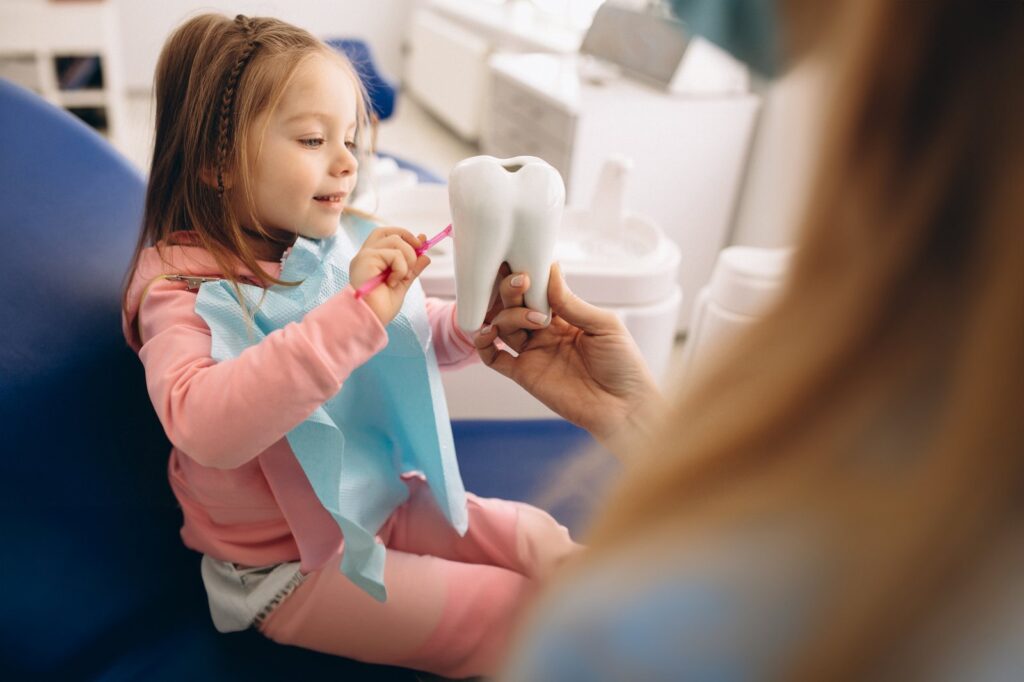
What Is a Palate Expander?
A palate expander is a custom appliance that gradually widens the upper jaw, also called the palate. It attaches to the upper back teeth and applies gentle pressure to separate the two halves of the palate, which are still growing together in children. That creates more room for teeth and helps correct bite problems.
Expanders work best in children and preteens because the palatal suture, the growth seam that runs down the roof of the mouth, hasn’t fused yet. Once it fuses in the late teens, expansion becomes much harder without surgery.
Dr. DiMarzio and Dr. Marczak most often recommend expanders for:
- Crowded teeth
- Crossbites, where the upper teeth sit inside the lower teeth
- A narrow upper arch
- Permanent teeth that can’t come in because there isn’t enough space
Most expanders are fixed in place and worn around the clock. Removable versions exist for milder cases, though fixed appliances give more predictable results. Expansion is often followed by braces or Invisalign to finish straightening the smile.
How Does a Palate Expander Work?
The appliance is attached to your child’s upper molars, with a small screw in the center of the roof of the mouth. At home, you turn that screw with a tiny key on a schedule your orthodontist sets, usually once a day. Each turn adds a small amount of tension across the palate.
That tension gently separates the two halves of the upper jaw at the midline. Over time, new bone fills in the space between them and the wider arch becomes permanent. This is why timing matters so much. A growing child’s body responds to the pressure by building new bone, while in adults the suture has already fused.
A typical timeline looks like this.
- Active expansion. Two to four weeks of daily turns.
- Retention. Four to six months with the expander left in place so the new bone can harden.
- Total treatment time. Usually four to seven months.
Your orthodontist uses digital X-rays and photos to map out the plan and check progress at every visit.
Signs Your Child May Need a Palate Expander
What Signs Should Parents Watch For?
Some clues are easy to spot during brushing. Others only show up during an orthodontic exam. Watch for these signs.
- Crowded or overlapping teeth
- Upper teeth that bite inside the lower teeth
- A narrow, V-shaped smile
- Mouth breathing, especially at night
- Snoring or restless sleep
- Chewing on one side
- Permanent teeth that seem stuck or blocked from coming in
If you notice any of these, an exam can show whether expansion will help. A thorough evaluation looks at alignment, bite and jaw growth together, so nothing gets missed.
What Are the Benefits of Early Expansion?
- Makes room for permanent teeth. Widening the arch often reduces or removes the need to pull teeth later.
- Corrects crossbites early. Fixing a crossbite while your child is still growing helps prevent uneven jaw development and wear on the teeth.
- May improve breathing. A wider palate can open up the nasal airway, which sometimes reduces snoring.
- Shortens future treatment. Kids who have an expander often spend less time in braces or aligners later on.
- Widens the smile. A broader arch gives a fuller, more balanced smile.
Early treatment doesn’t replace braces for every child. It sets the foundation so later treatment is simpler, shorter and more predictable.
Types of Palate Expanders
Not every expander is the same. The right one depends on your child’s age, how much widening is needed and whether other bite issues are involved. These are the most common types.
- Rapid palatal expander, also called a Hyrax. Fixed in place and usually used for ages 7 to 14. This is the most common type and works well for moderate to significant widening. It’s the one we recommend most often for kids.
- Haas expander. Fixed in place and usually used for ages 7 to 14. It’s similar to the Hyrax, with an acrylic pad for added stability.
- Quad helix. Fixed in place and usually used for ages 6 to 10. It widens more slowly and gently, doesn’t need daily turning and is often chosen for younger children or smaller changes.
- Removable expander. Usually for ages 10 and up. It’s best for mild cases in older kids who will wear it as directed.
- MARPE, or mini-implant assisted expander. For teens and adults whose sutures have partly or fully fused. Tiny implants anchor the appliance to the bone, which makes expansion possible without surgery in many cases.
Your orthodontist will recommend the type that fits your child’s anatomy and goals.
Palate Expander Cost and Insurance
The cost of a palate expander depends on the type of appliance, how long treatment lasts and whether it’s a standalone phase or part of full orthodontic care. When braces or Invisalign are part of the plan, the expander is often included in the overall treatment fee.
Dental insurance may cover part of expansion, especially when it’s medically necessary, such as correcting a crossbite or addressing airway concerns. Many families also use HSA or FSA accounts.
We offer financing and payment plans to keep treatment manageable, and your free consult includes a clear breakdown of what your child’s care will cost.
What Is the Best Age for a Palate Expander?
The ideal age is usually between 7 and 14, while the palatal suture is still open and responds well to gentle pressure. Most jaw and facial growth happens in this window too, so the body’s response to expansion is especially strong.
The American Association of Orthodontists recommends a first orthodontic evaluation by age 7. That doesn’t mean treatment starts then. It’s simply the age when crossbites, crowding and narrow arches start to show up on an exam.
- Age 12 is often not too late. The suture usually begins fusing in the mid-teens, so there’s often still a window.
- Teens and adults with a fused suture may need a MARPE or surgically assisted expansion.
- Only an exam can confirm candidacy. X-rays, photos and a clinical exam show whether the suture is still open.
Every free consult at our Quincy office includes a thorough evaluation, so you’ll leave knowing where your child stands and what the best next step is.
Frequently Asked Questions
What age are palate expanders used?
Palate expanders work best between ages 7 and 14, while the palatal suture is still open. Many kids who need expansion get it between ages 8 and 11, though the exact timing depends on growth and bite.
How painful is a palate expander?
An expander creates pressure, not sharp pain. Most children feel tightness or tingling after each turn and some soreness for the first two to three days. Soft foods help during that stretch, and within a week most kids barely notice it.
How do palate expanders change your face?
In children, the changes are usually subtle. Many parents notice a slightly wider, fuller smile. Expansion in kids focuses on healthy arch width and a proper bite, not reshaping the face.
Is 12 too late for a palate expander?
Not usually. At 12, the suture is often still open enough for a traditional expander. By the mid-teens that window starts to close, and older patients may need a MARPE or another approach. An exam can confirm whether standard expansion is still an option.
Will my child still need braces afterward?
In most cases, yes. An expander creates space and fixes width problems, but it doesn’t line up individual teeth. Braces or Invisalign usually follow, and that treatment tends to be shorter and simpler because the foundation is already in place.
What foods should my child avoid?
While the expander is in, skip sticky, hard and chewy foods that can damage it or get stuck in the screw. That means no caramel, taffy, gum, hard candy, ice, popcorn or crunchy nuts. Softer versions of favorite foods work well, and most kids adjust within a few days.
Still wondering if your child could benefit from a palate expander? The best next step is a visit with an orthodontist who can look at growth, bite and airway together. Dr. DiMarzio and Dr. Marczak are always happy to answer questions and talk through whether expansion is even needed. You’ll get honest guidance with no pressure.