
When your upper front teeth overlap your lower teeth more than they should, you’re dealing with an overbite. Understanding your overbite treatment options and what to expect helps you make confident decisions about your smile. If you’re exploring treatment for yourself, your teen, or your child in the Quincy, MA area, this guide walks you through everything from diagnosis to lasting stunning results.
What Is an Overbite?
An overbite happens when your upper front teeth vertically overlap your lower front teeth by more than the typical 2-4mm range. When this overlap becomes excessive, orthodontists classify it as a deep bite that usually benefits from treatment. Both kids and grown-ups can have one, and the good news is that it’s very fixable.
When the overlap exceeds 4mm, or covers more than 30% of the lower teeth, orthodontists typically recommend treatment. Keep in mind that overbite differs from overjet. Overbite measures vertical overlap. Overjet measures horizontal protrusion, where the upper teeth stick out in front of the lower teeth.
Orthodontists also classify overbites by their cause:
- Dental overbite: The teeth themselves are positioned incorrectly, but the jaw structure is normal
- Skeletal overbite: The jaw bones have grown unevenly, causing the bite problem
This distinction matters because it shapes your treatment approach. Children, teens, and adults can all have overbites. Effective treatment exists for every age group and lifestyle.
How Does Overbite Treatment Work?
Overbite treatment works by gradually shifting teeth, guiding jaw growth, or repositioning the jaw to correct the vertical overlap. Your orthodontist starts with a thorough evaluation, then designs a custom approach using braces, aligners, or supportive appliances. The goal is a healthy bite with stunning results that last.
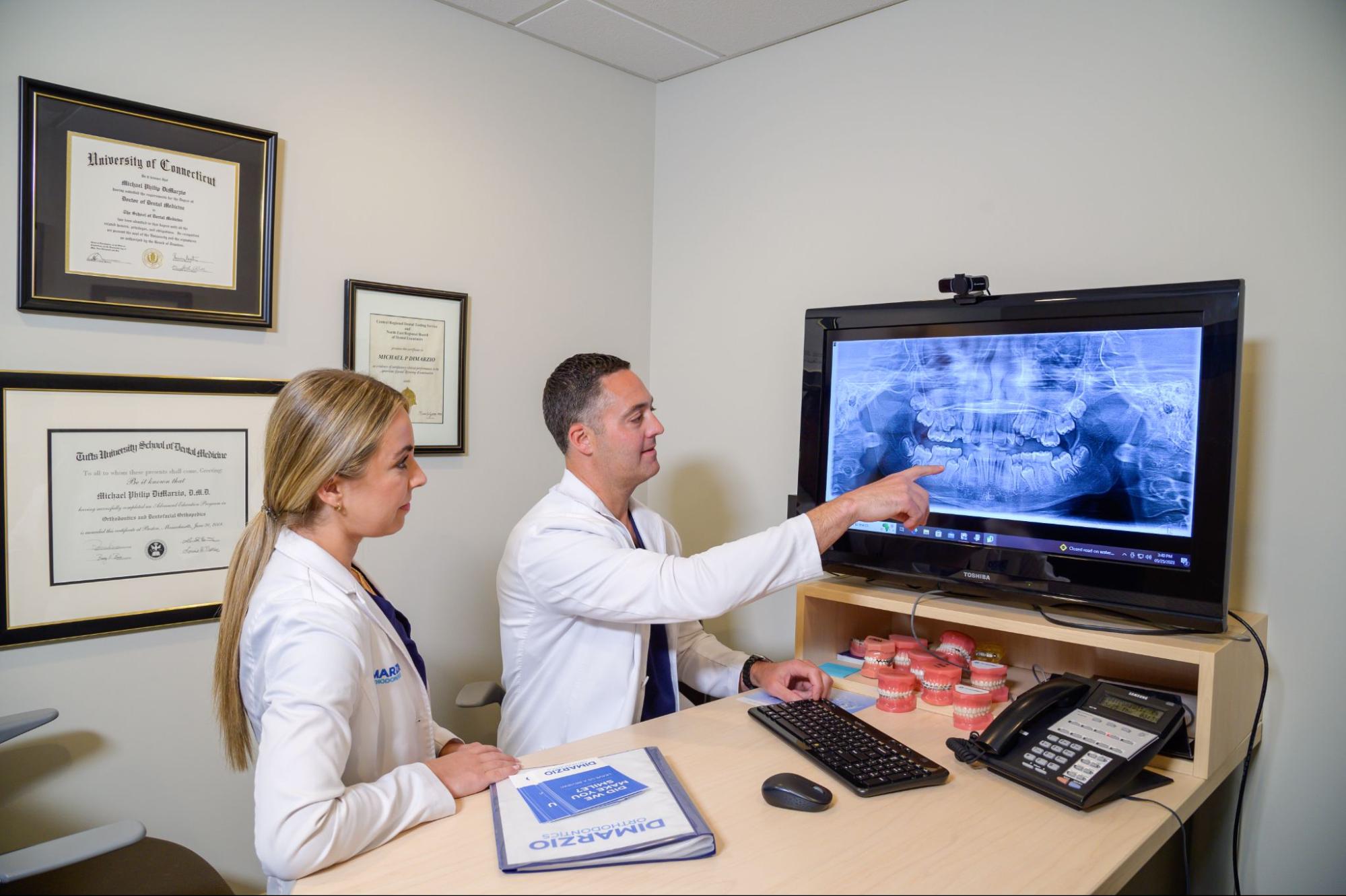
Your orthodontist will complete a full exam that includes X-rays and digital imaging to see exactly what’s happening with your teeth and jaw structure. From there, your treatment takes shape based on three key factors: your age, how severe the overbite is, and whether it’s dental or skeletal in nature.
For Dental Overbites
Braces or clear aligners gradually shift your teeth into proper vertical alignment. The process uses gentle, consistent pressure to move teeth while the surrounding bone naturally remodels.
For More Complex Cases
Additional tools come into play:
- Elastics (rubber bands): Connect upper and lower braces to adjust how your bite comes together
- Palatal expanders: Widen the upper jaw in growing patients
- TADs (temporary anchorage devices): Small titanium screws that provide extra anchorage for difficult tooth movements
For Severe Skeletal Overbites in Adults
Surgical orthodontics may be the most effective path. This combines braces with jaw surgery to reposition the bones themselves.
Once your teeth reach their ideal positions, retainers keep them there. This final phase is just as important as the active treatment. Your teeth will want to drift back without proper retention, so think of retainers as the insurance policy on all that hard work.
Benefits of Correcting an Overbite
Fixing an overbite does more than improve your appearance. Here’s what proper treatment accomplishes:
How Does Treatment Protect Your Teeth?
Deep overbites cause the lower front teeth to hit the backs of the upper teeth or even the gum tissue. Over time, this leads to excessive wear, chips, and fractures. Correcting the bite stops that damage in its tracks and preserves your natural enamel for the long haul.
Can It Reduce Jaw Soreness and TMJ Issues?
An improper bite puts strain on your jaw joints. Many family members with untreated overbites experience clicking, popping, headaches, or chronic soreness. Aligning the bite often takes that pressure off and brings real, lasting relief.
Does It Improve Daily Function?
Chewing becomes more efficient when your teeth meet correctly. Some family members also notice clearer speech after treatment. Simple things like biting into an apple or pronouncing certain sounds suddenly feel easier.
How Does It Make Oral Hygiene Easier?
Overlapping teeth create tight spaces where plaque hides. Straightened teeth are simpler to brush and floss, lowering your risk of cavities and gum disease. Healthier gums and fewer cleanings spent picking out trouble spots is a win for everyone.
Will It Enhance Your Smile and Profile?
A corrected bite often improves facial balance. Many family members feel more confident showing their smile after treatment, which is one of the most rewarding parts of the whole experience.
Comparing Overbite Treatment Options
| Treatment Option | Best For | Visibility | Typical Timeline | Key Considerations |
|---|---|---|---|---|
| Metal Braces | Moderate to severe overbites | Most visible | 12-24+ months | Most versatile; handles complex cases |
| Clear Braces | Moderate overbites | Tooth-colored brackets | 12-24+ months | Same effectiveness as metal; more discreet |
| Invisalign | Mild to moderate overbites | Nearly invisible | 12-18 months | Removable; requires discipline |
| Surgical Orthodontics | Severe skeletal overbites | Braces during treatment | 18-30 months total | Only option for some adult skeletal cases |
For many decades, metal braces have been the workhorse of overbite correction. They handle the most complex cases and give your orthodontist precise control over tooth movement. Today’s brackets are smaller and more comfortable than older versions, so they’re much more wearable than what your parents might remember.
A close cousin to metal, clear braces work the same way but use tooth-colored or ceramic brackets. They’re harder to notice, making them popular with adults and image-conscious teens who’d rather keep the hardware low-key.
Then there’s Invisalign, which uses a series of custom clear aligners to shift teeth gradually. For mild to moderate overbites, Invisalign can be highly effective. You remove the aligners to eat and brush, which many family members prefer. Success does depend on wearing them about 20-22 hours daily as recommended.
When jaws stop growing and the overlap is severe, surgical orthodontics becomes necessary, especially in adult cases where the bite stems from significant jaw discrepancy. Braces align the teeth before and after surgery, while the procedure repositions the jaw itself.
Your choice depends on your specific case, lifestyle, and goals. Cost and insurance coverage also factor in, and your orthodontist will help you weigh all of these.
Factors That Influence Overbite Treatment Cost
Overbite treatment cost varies based on a handful of key drivers: how severe the bite issue is, which treatment type you choose, how long treatment takes, what extra appliances you need, and what your insurance covers. Most practices in Quincy, MA also offer payment plans to spread the investment out over time.
Several variables affect what you’ll invest in overbite correction:
Severity and complexity. A mild dental overbite requires less time and fewer appointments than a severe skeletal case. More complex treatment costs more.
Treatment type. Metal braces typically cost less than clear braces or Invisalign. Surgical cases involve additional fees for the procedure itself.
Treatment duration. Longer treatment means more office visits and adjustments, which increases the overall cost.
Additional appliances. Elastics, expanders, TADs, or other tools add to the treatment plan and its cost.
Your insurance benefits. Many dental plans include orthodontic coverage. Check your specific benefits. Some cover a portion of treatment for children but not adults.
Payment options. Many practices offer financing options to help make treatment accessible for every family. Most offer monthly payment plans that spread the cost over your treatment time.
A free consult gives you a clear picture of what your specific treatment will involve and cost.
Who Is a Candidate for Overbite Treatment?
Almost anyone with an overbite can benefit from treatment. The approach simply varies by age and situation. For families in Quincy, MA, getting evaluated early makes a real difference.
Children (ages 7-10): The American Association of Orthodontists recommends an orthodontic evaluation by age 7. At this point, early intervention can guide jaw growth and create space for permanent teeth. Not every child needs early treatment, but catching problems early gives your orthodontist more options.
Teens (ages 11-17): This is often the ideal window for full overbite correction. Most permanent teeth have erupted, and the jaw is still growing enough to respond well to treatment.
Adults: It’s never too late to fix an overbite. Adults can achieve stunning results with braces, Invisalign, or surgical orthodontics when needed. Treatment may take slightly longer than for teens, but the outcomes are just as rewarding. The team at DiMarzio Orthodontics regularly works with adult family members who decided their smile was worth the wait.
Good candidates generally have:
- Healthy teeth and gums (or are willing to address any issues first)
- Commitment to following treatment instructions
- Realistic expectations about the process and timeline
Signs you might benefit from overbite treatment:
- Visible deep bite when you smile
- Jaw soreness, clicking, or headaches
- Wear patterns on your lower front teeth
- Difficulty biting into food properly
- Self-consciousness about your smile
Your first step is usually a free consult with your orthodontist to evaluate your bite and discuss your options.
Frequently Asked Questions About Overbite Treatment
How long does overbite treatment take?
Treatment time varies based on severity and the method used. Mild overbites may correct in 6-12 months. Moderate to severe cases typically require 18-24 months or longer. Your orthodontist will give you a realistic timeline during your free consult based on your specific situation.
Can Invisalign fix an overbite?
Yes, Invisalign effectively treats many mild to moderate overbites. The aligners can be combined with attachments and elastics to achieve vertical tooth movement. Severe overbites or skeletal cases may still require braces or surgery for optimal stunning results.
Does overbite treatment hurt?
Most family members experience mild soreness rather than sharp sensations. You’ll feel pressure after adjustments as your teeth begin moving. This typically fades within a few days. Over-the-counter soreness relievers and soft foods help during adjustment periods. The tenderness is manageable for family members of all ages.
What happens if an overbite is left untreated?
Untreated overbites tend to worsen over time. You may experience accelerated tooth wear, increased risk of chips or fractures, gum recession, TMJ problems, and difficulty chewing. Addressing an overbite now prevents more extensive treatment later.
Can adults still correct an overbite?
Absolutely. Adult overbite treatment is common and successful. While treatment may take slightly longer than for teens, adults achieve lasting stunning results with braces, clear aligners, or surgical orthodontics. Your bones can still remodel at any age, which is great news for adult family members across Quincy, MA who thought they’d missed the window.
Will I need surgery for my overbite?
Most overbites correct without surgery. Surgical orthodontics is reserved for severe skeletal overbites in adults where the jaw bones themselves need repositioning. Your orthodontist will determine whether surgery is necessary based on your X-rays and exam. Many family members who assume they need surgery actually achieve great results with braces or aligners alone, so it’s worth having that conversation with a board-certified orthodontist at a trusted practice like DiMarzio Orthodontics before assuming the worst.
Learning about your overbite treatment options is the first step toward a healthier, more confident smile. With the right information and a board-certified orthodontist guiding your treatment, you can feel ready for whatever path fits your needs best.